
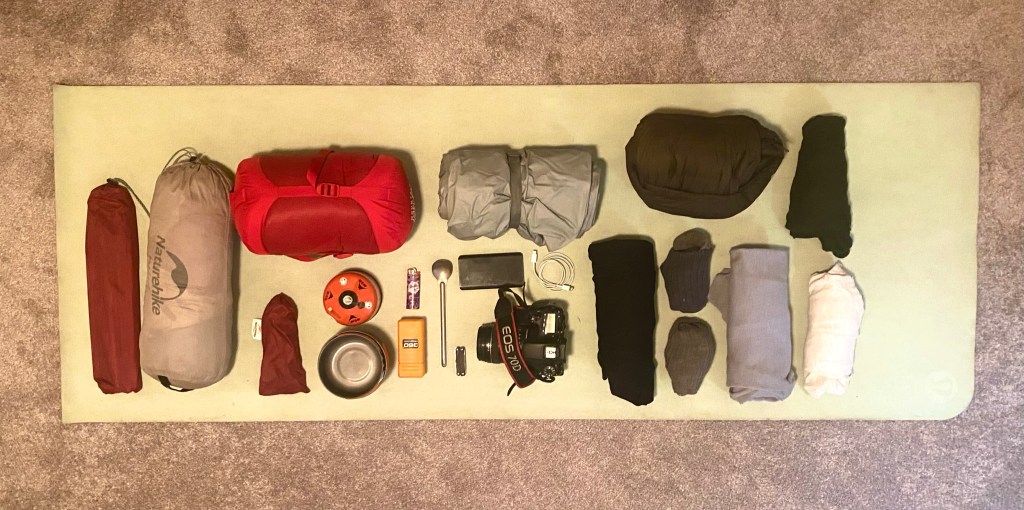
Let’s talk about the trekking packing list. An extremely essential part of having fun and being safe on the trail!
Are you new to hiking and have no idea what to bring, or what not to bring? Being in the wilderness and discovering I forgot my sleeping bag (that actually happened..) and finding myself using my sleeping bag liner and wrapping myself in an emergency blanket to rough out the night isn’t exactly “fun”. However, it made for a good story I can laugh at now, and I will NEVER head out without checking my gear again.
Everyone is a little bit different with their preferences of brands and gear that they find essential. Here I will talk about what I bring and why!
In the backpack
- 50L backpack
- Tent
- Sleeping mat
- Sleeping bag
- Water filter and water pouch
- Stove, fuel, pot/s and mug
- PLB (Personal locator beacon) + subscription
- Compass
- Smart phone + solar charger
- First aid kit
- Clothing – elaborated in detail below
- Camp shoes (Crocs, Birkenstocks, sandals etc.)
What I like to wear
- Leggings
- Bamboo or cotton smaller singlet or t-shirt
- Wool long sleeve (colder hiking)
- Cotton long sleeve (warmer hiking)
- Puffy (light-weight down jacket)
- Wool jumper (sweater)
- Wool socks
- Leather boots OR trail runners (weather and terrain dependant)
- HATS! Cap, beanie and wool headband
- Two buffs (neck socks)
Sleep system

I value my sleep, and even more so when I am out trekking and need to rest up for another big day of hiking. Most of my hiking and trekking is in either cooler climates, higher elevations, or places where the temperature drops overnight, even in summertime the nights can be alarmingly cold! Being warm enough is essential to getting a good nights sleep, so spending the money on quality gear is something that is worth it to me. I use the phantom -9C feather down sleeping bag by mountain hardware. Talk about luxury, it is the cosiest sleeping bag I have ever used. The coldest I have slept in it was -5C and it was very, very warm. Paired with my Ether Lite XT insulated mat – women’s regular, by Sea To Summit, and I’m ultra toasty and cosy.
While I’m here dropping name brands, these are ones I’ve tried and tested and they work well for me. There are a lot of brands out there, I suggest you read reviews, good and bad reviews, to get a really good feel for something that works for you and your needs.
I do believe going a little bit warmer is a good idea, I’ve slept cold before and I can tell you it is not fun or restful. So the extra $100 now on something rated for colder temperatures will be worth that extra bit of warmth, with quality gear that is going to last you a very long time.
I also like to have a pillow, which I make myself using my puffy (knock off brand I bought in Nepal for $50USD – actually so warm and very light, I love it!) wrapped up in my sleeping bag stuff sack. It is comfy and I find the neck support to aid in a restful sleep, and I am using items for multiple uses instead of buying a blow up pillow!
I prefer to sleep clothed, getting up in the night to pee and having to pull on pants and a shirt just adds length to the unwanted late hour event. So I sleep in loose fitted pants and a long sleeve shirt, my camp wear.
The clothing
I’m a huge fan of wool. It is breathable, warm, it doesn’t hold smell, and if you go with types like merino your clothes will be super soft and cosy. You’re going to be wearing the same thing over and over again, so choose wisely. Synthetic materials don’t breathe as well as natural fibres, leading to a build up of bacteria and that lovely hiker smell.
In the evenings I like to air out my hiking clothes once I am changed into my evening wear. Drying off sweaty clothing can be a challenge in very cold temperatures and even in hot temperatures when the humidity level is extremely high. Love putting my wet shirt on in the morning, great way to start the day.. This happens rarely for me, and I’ve learnt to be efficient when arriving to camp, taking the time to hang clothing up in the sun, in an open space, or near a fire to get them nice and dry to start the next day “fresh”.
Extra gear
I personally like to have a camera with me, if I’m hiking a hundred kilometres into the mountains or the forest, I’m going to take some photos. This is at minimum my iPhone, they just take great photos! I find it lasts a couple of days on flight mode, which is great for those longer trips! I will bring a solar charger/battery bank with me to keep it’s battery life.
I have also brought my Canon dslr with me on some of my more epic trips into the Himalayas and Andes. Heavy but worth it.
I bring a compass with me. This is a small item that I deem essential. If you become lost or disoriented, you can use the compass to guide you in a straight line. There are many stories of people going round in circles and confused as to where they are, not all of them happy endings either.
A first aid kit. This will have some tea tree oil (for antiseptic) for any skin abrasions or cuts that happen on trail. Some bandages and tape. Blisters are an absolute bitch and can really suck the fun out of being on the trail. Prevention is the best method, so wear gear that fits you correctly, and tape any “hot spots” as soon as you feel them.
Summary
Enjoy your experience on the trail, by being prepared. We are told so much to live in the moment, and I find this quite true about planning. I find it very exciting to organise and plan my trips, making sure I have all of the items needed for a safe and FUN trek!
Happy hiking friends!
Check out my blog posts on trekking in places like Paramillo del Quindio, the mountainous trek in Los Nevados, Colombia.
Or you could go for the ultimate Andes experience and head to Peru to trek The Huayhuash Trek, or The Santa Cruz Trek!

 Georgie’s Wanderlust
Leave a comment