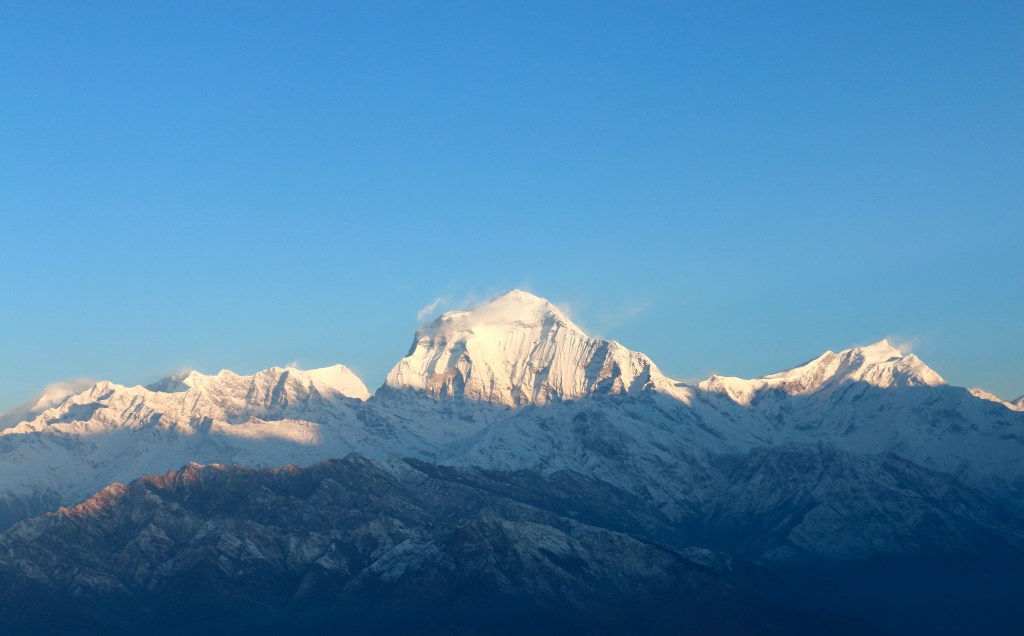
The Annapurna circuit trek in winter in Nepal was an absolute trip of a lifetime. The sun-shining on the powdered white mountains, the long suspension bridges across glacial rivers, the warm teahouses to welcome you at the end of each long day.
So have you been dreaming of wandering high into the Himalayas?
Is a 250km trek in Nepal on your bucket list?
Do you wish to see the mountains covered in snow in all their majesty?
Do you want clear skies during the day, and dal bhat by the fire in the evenings?
Then perhaps a Himalayan winter wonderland adventure is for you!

My trek began in February 2022, the “end” of the winter season, I started in Besisahar and finished in Nayapul. 250kms of Himalayan glory trekked over 15 days. We were absolutely blessed with good weather, mostly clear skies, and over the fifteen days we had a total of three hours rain.
Let’s get more serious for a moment. Hiking in the mountains at any time of year is not for the faint hearted. Blizzards can roll in at anytime of year, causing mountain passes to become impassable. People die in the mountains in Nepal every year, a lot of these people are the ones attempting Everest, rest their souls. There are deaths on the Annapurna circuit trek too, while this is terribly sad, it is good to know the dangers that lie ahead. Always know your limitations, familiarise yourself with the mountain conditions, hire a guide, recognise the early warning signs of altitude sickness, and if you have to, turn around and head back down the mountain.
But don’t let that dampen your spirits, it’s good to be aware of these things, but you can still have a safe and fun time in the mountains!
Now let’s go over everything you need to know to prepare for your big Himalayan adventure!
- Reasons to trek Annapurna circuit in the winter
- The necessary gear
- The Cost
- Altitude sickness
- What is Dal Bhat?
- The group members
- Day by Day
- Summary
Reasons to trek Annapurna circuit in the winter
- The trail in winter will be quieter
- It is dry season, so your chances of sunshine are high
- You will feel the magic of the snow covered mountains
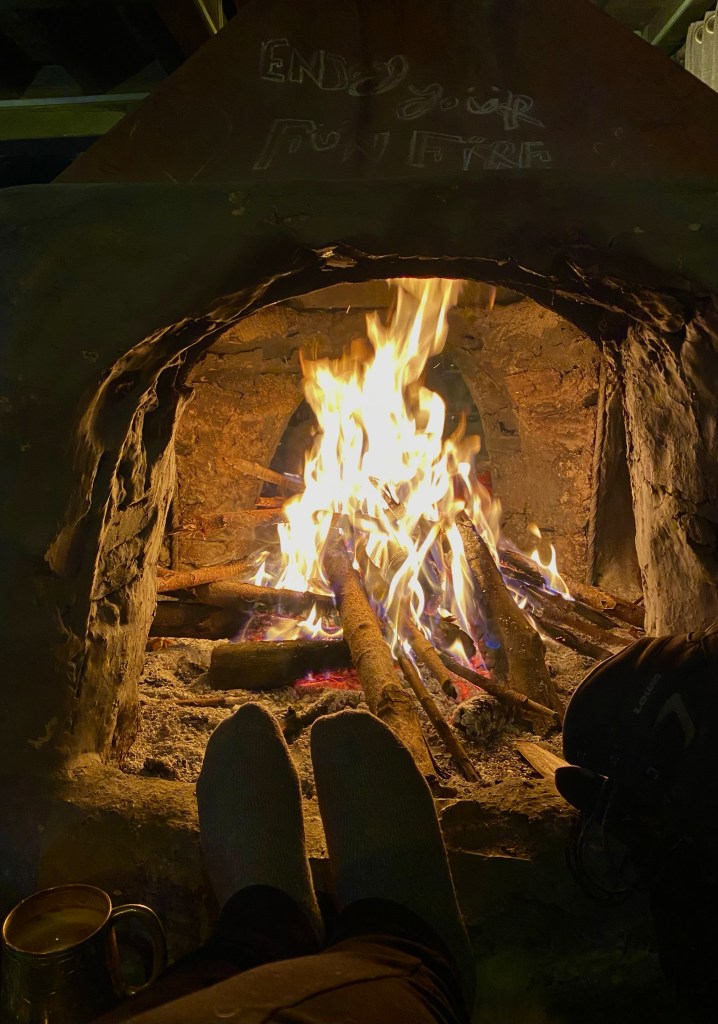
- The fire in the teahouses will warm your toes and your soul in the evenings
- You will challenge yourself in beautiful ways
- You will have powerful lungs and legs of steel
- You can eat more when it’s cold because you burn more calories
The necessary gear
You are heading into the Himalayan mountains in the winter time, you are going to experience snow and very cold temperatures.
The majority of my trekking trips have been high in the mountains, requiring reliable and warm clothing. For a more in depth read, my Ultimate Trekking Packing List goes into detail of what to pack. People don’t tend to camp on the Annapurna Circuit trek, and it’s going to be freezing so I wouldn’t suggest it in the wintertime. You aren’t going to need a tent as the teahouses are so affordable and comfortable. It also helps to support the local mountain people. Trekkers are a huge part of their income, it’s nice to give back while you’re experiencing the beauty of the Himalayas. Plus they cook all of their food from scratch so you will eat very well.
I had my merino base layer shirt already, a couple of pairs of leggings, and a really good pair of merino wool trackie pants that I got on sale for half price in Australia.
A lot of my gear I actually picked up in Nepal, here is what I paid:
I bought a knock-off down jacket in Thamel, Kathmandu for $50AUD – very warm and I still use it today. In Pokhara I bought two trekking poles – $20AUD, waterproof pants – $8AUD, crampons – $10AUD, and a face mask (for the cold) – $5AUD. I used all of these items, giving them away to locals on the trail once the snow had cleared and I no longer needed them – I kept the face mask, and the jacket has been used on trekking trips in Canada, Peru, Ecuador and Colombia!
I basically had my hiking clothes, and my night time clothes. I was able to wash my undies and air out my socks to make it through the 15 days. The only regret with my clothing I had was I wish I had brought one more base layer t-shirt for trekking in. By day 12 it was very challenging to put on that same disgusting shirt on AGAIN in the morning. During other times of the year it is probably a bit easier to hand wash clothing and have it dry by morning, but not in the winter time. It’s just too cold to get things dry, and the warmth from the fire only reaches about a metre away and is reserved for cold hands and toes, and boots of course.
The Cost
My trek was in February 2022, so these prices are relevant to then. After the pandemic, costs went up worldwide. I’m not sure of specific prices currently in Nepal. It’s best to ask around and do your research before you go! Mind you Nepal is still a very affordable and cheap country to travel in, so I can’t imagine much variation in these prices.
I paid approximately $17AUD per day for our guide on the trail. Quin and Lovis paid the same.
My additional gear purchased equaled $93AUD.
For lodging, food, snacks, and a pair of warm yack wool mitts I purchased on the trail, I spent an average of $20 per day.
We hired a local guide in Manang to cross Thorang La Pass, this was $50AUD each.
There was about $10AUD total for the bus to the trailhead, and the taxi back to town at the end.
So for 15 days I spent approximately $708AUD. Or $47.20AUD per day. Not bad for the trek of a lifetime if you ask me.
Altitude sickness
What exactly is altitude sickness? Altitude sickness occurs when a person ascends too quickly to a high altitude without giving their body time to adapt to the changes in oxygen levels. This can be extremely dangerous, it can happen to anyone, and it can cause irreversible damage to your precious internal organs.
It usually starts to affect people after 2,500m.
The best way to avoid this, is by ascending slowly, taking rest/acclimatisation days, listening to your body and knowing the signs, and if shit hits the fan, returning to a lower altitude.
Altitude sickness can cause headaches, hyperventilation, nausea, and extreme exhaustion. Know your limits, and stay safe in the mountains 🙂
What is Dal Bhat?
Dal bhat is what you are going to eat everyday while you are on the trek.
It is steamed rice, a lentil dal that varies slightly at every teahouse. It comes with lots of little servings of various individually cooked seasonal veggies on the side. We had lots of greens early in our trek, and when the snow covered the ground we ate more potatoes.
It is also “unlimited”, with the teahouse hosts coming around to offer you more and more. This is dangerous as you feel like you can eat A LOT of dal bhat while trekking.
Very delicious and it was fun to try so many different dals along the way.
The group members
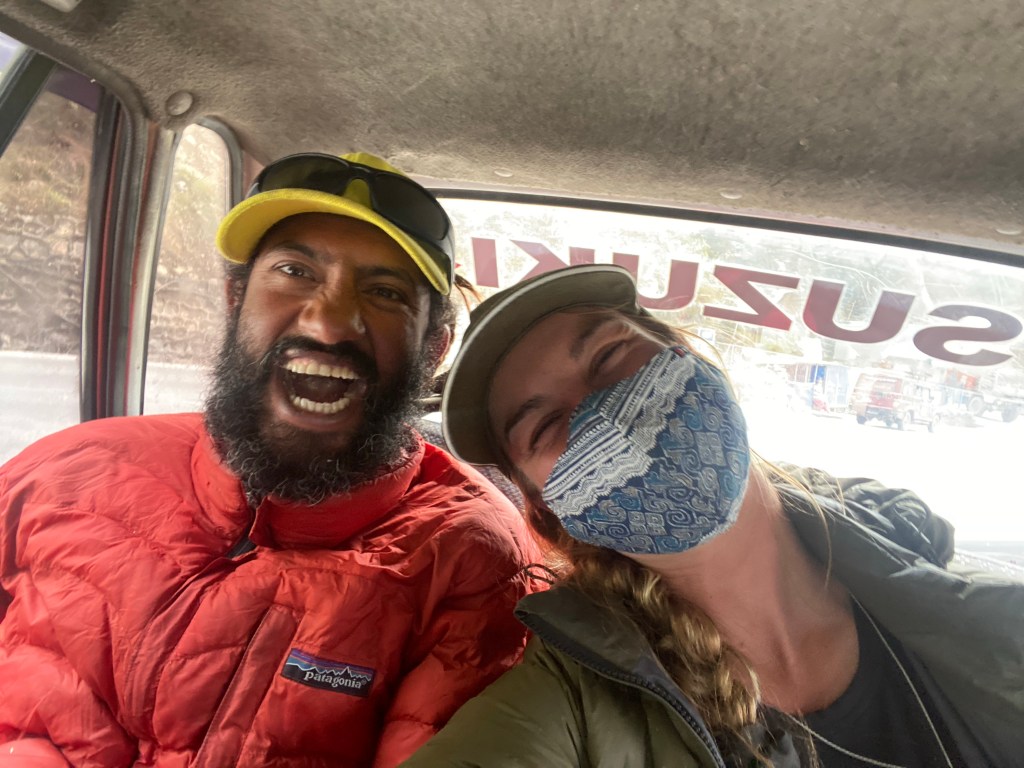
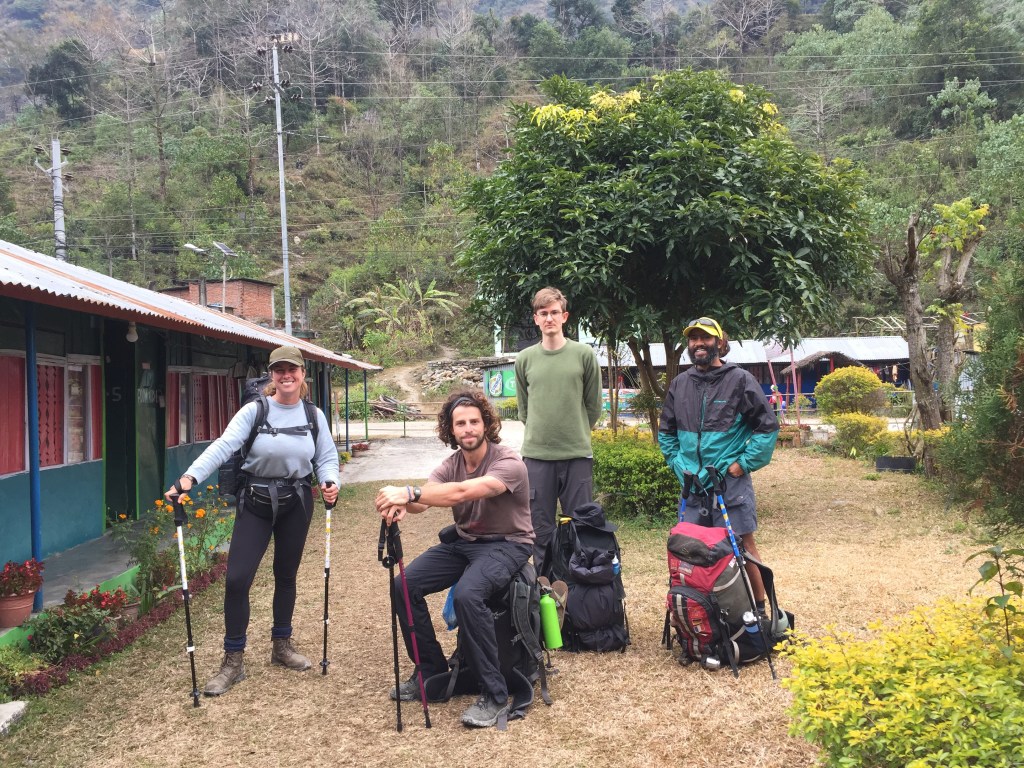
Our group consisted of Quin, who was the glue to the group. He was the connecting piece to each group member. I had met Quin the month prior while we were both completing our yoga teacher trainings in Kathmandu. An incredibly strong and flexible guy, who could serenade you with his guitar, or share his charming wisdom over dinner. Him and Lovis got me on the Kindle train, too. Many thanks guys.
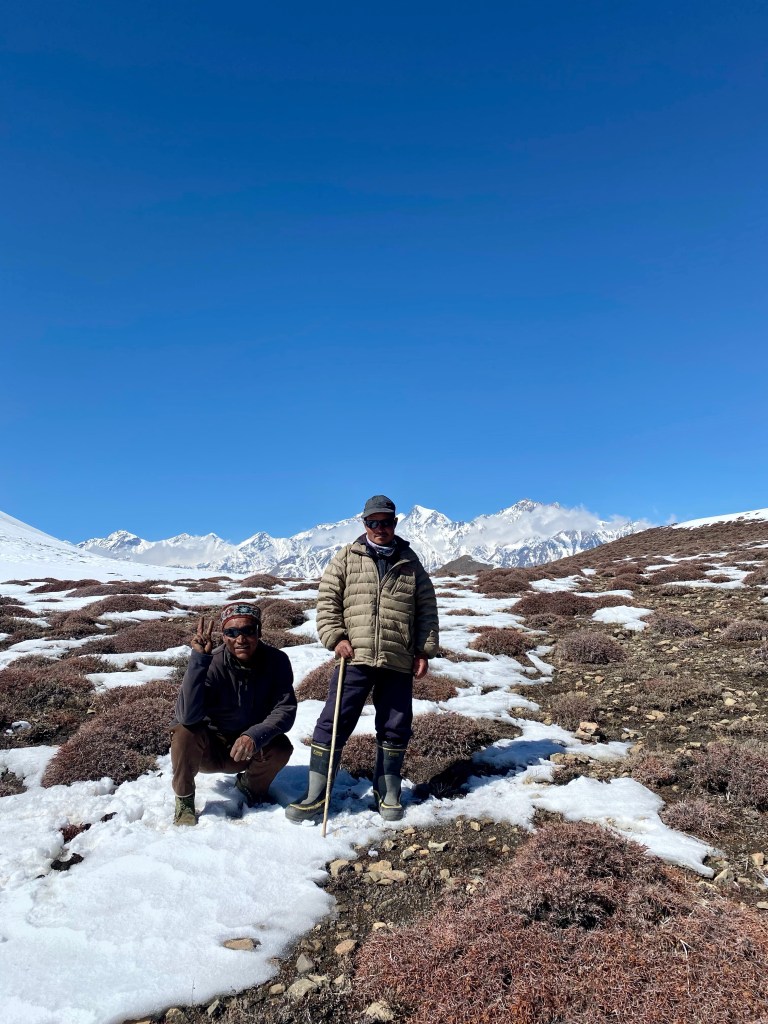
Our Nepalese guide, Om, who had been trekking in the Himalayas by foot for a long time. I believe our round Annapurna journey was his 50th time! Also an avid mountain biker, taking to the pedals to cross mountain passes – insane. Om and Quin had hiked in Lang Tang in December together, and he agreed to guide us round Annapurna!
I highly recommend having a guide in the mountains. The trail itself is relatively easy to follow (although dangerous getting across Thorong La pass), but for me having Om really made the trek more special. Being Nepalese and familiar with the area, he could point out things to us, and converse with local people to give us some really unique experiences in the tea houses and peoples homes. Plus he was fantastic for a joke and a laugh!
We also had Lovis, one of Quin’s best friends who had flown in from Germany. Specifically to go trekking and spend time with Quin. Lovis has a very unique view of the world, incredibly logical, with the most beautiful eye for film photography and videography. Great for a belly laugh too.
And myself, the fourth member. After spending one month practising yoga all day, and riding an absolute high of gratitude for the life I was living, I laughed a lot on this trip. I have some of the most heartwarming memories from those mountains, and still feel the gratitude of what the place and the people gave to me during those 15 days.
Day by Day
Day one – Pokhara to Besisahar by bus. 4.5 hours.
Besisahar (elevation 785m) to Nadi Bazar, 13.5km. Elevation 912m.
Pretty easy day, mostly on the road with a very gradual elevation gain.
In the evening we ate our first dal bhat and enjoyed an outdoor fire.

Day two – Nadi Bazar to Bahundanda, 7km. Elevation 1,295m.
This was by far our shortest day for distance covered for the circuit. The stairs to the accomodation were something else though. We stopped for lunch at a teahouse with a rooftop and decided to stay there the night. After lunch we took a day trip without our big packs up to a tiny little village and had biscuits and tea with some local people. 8km return.
We began playing Durak, a Russian card game, where it’s not about winning, but not losing. The loser was made to do 10 push-ups.
Day three – Bahundanda to Tal, 21km. Elevation 2,705m.
Our first longer day with a significant amount of elevation gain. The elevation gain was gradual over the day, making it less brutal, but still making us excited to arrive to our teahouse and take off our boots in the evening. Particularly because this was our one and only day with a few hours of rain.
Day four – Tal to Chame, 24km. Elevation 2680m.
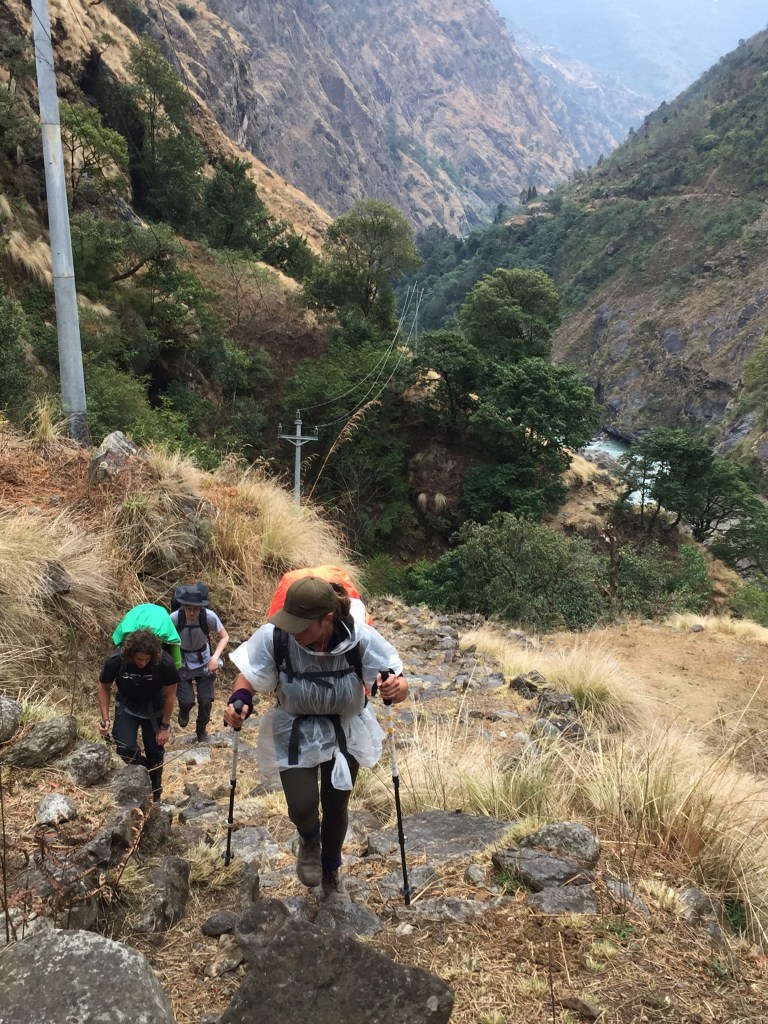
This was an unintentionally longer day, and the day we reached a significant amount of snow. Although we came down slightly in elevation, the day was spent rising up the mountain and back down the mountain, “what goes up must come down” as Lovis would say.
There was now too much snow for Jeeps to pass, only travellers on foot from now on.
Day five – Chame to Lower Pisang, 15.5km. Elevation 3205m.
A decent day for distance, we passed an apple orchard, and had stopped eating dal bhat for lunch AND dinner by this stage. Eating noodle soup for lunch instead, much easier on the digestive system.
Day six – Lower Pisang to Manang, 18km. Elevation 3,550m.
Today was exciting, we were arriving to Manang, our rest stop before we would make the final push up and over the Thorang La Pass.
A usual day of Durak, noodle soup, giggles, and yoga by the fire in the evening. We also got to try yak burgers – delicious.
Day seven – Rest day in Manang. Elevation 3,550m.
The rest day was also an acclimatisation day. Going from 785m to 3,550m of elevation in six days is a lot for the body to handle. So we rested.
We ate very well in Manang, trying another yak dish with gravy and hoeing into our snacks. The fire was going all day for us, so we lazed around reading and doing yoga. Absolute bliss.
From Manang you get a pretty spectacular view of Annapurna’s various mountain peaks, the title to the trek. We saw and heard many avalanches on her during our time spent at the cosy teahouse rest stop.
Something that was decided with our group when we were in Manang was to join on with another group that consisted of four Norwegian girls and their two guides. We also had another solo traveller join on. The reason for us making a larger group was that we needed to hire a local guide to help us cross Thorang La Pass, that had seen a lot of snow fall in the last few days and was deemed dangerous. This had actually turned around several travellers who arrived to Manang or a little higher and simply had to turn around for safety.
We didn’t want to do that, and there was a lot of sunshine forecast for the coming days, so we decided to hire a guide for a fee, and to make it affordable we made our group grow to eight trekkers, and four guides.
I was thrilled to be continuing.
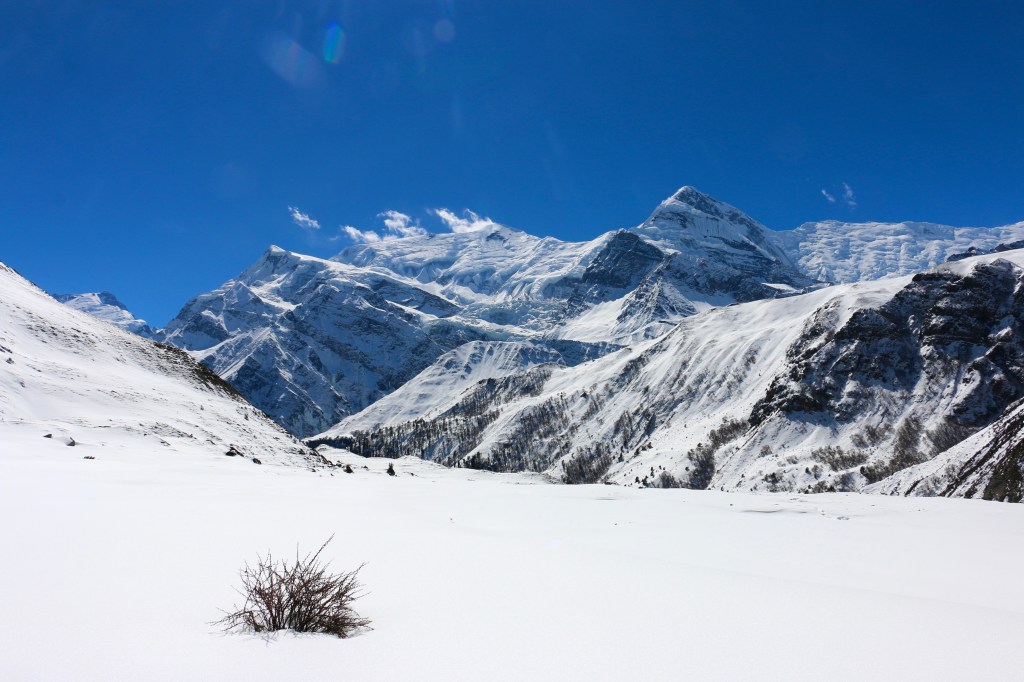
Day eight – Manang to Yak Kharka, 12km. 4,030m.
I remember vividly the first hour of this day being absolutely brutal. I was really feeling the elevation, and it wasn’t until about an hour in that I warmed up and adjusted and was able to proceed more comfortably.
The higher we got, the colder the nights were. the big group ate all together and we played our Durak. The losers 10 push-ups at this elevation were getting significantly harder.
Day nine – Yak Kharka to Thorung Phedi, 9km. 4,520m.
Hiking was getting exceedingly harder. While we had gained fitness and stamina from waking up and hiking mountains everyday, this was exchanged for altitude difficulties. The last two kilometres of this day saw 200m of elevation gain, the final 500m of trail being an absolute mammoth of a push. Ten steps forward saw me absolutely gasping for air. But we all made it, and it was by far the coldest night on the trail. I slept with two blankets as heavy as a futon on top of me, and I was still cold.
Day ten – Thorung Phedi to Thorong La Pass, 5,416m. Thorong La Pass to Runipauwa, elevation 3,670m. 17km total for the day.
This was the absolute biggest day.
We got up very early and started by 5am with torches on our heads. Slow and steady we pushed on in a single file line. A couple hours in it all got a bit too slow and our original group, plus the solo guy, overtook the others and made our own pace for the pass. The snow pack was low and it was easy to navigate our way up. We reached it with good time, we cheered, took photos, and about ten minutes later we were heading down the other side. It was so cold and we couldn’t afford to stop moving.
We started down and it quickly became apparent that the bulk of the snow that had fallen was on this side of the mountains. We were now wading waist deep through snow, breaking trail. Om took it like a champ and pushed ahead for us. I took the lead for a few short areas, but really he did the bulk of the work.
We ate mars bars and boiled eggs while sheltering from the wind in damaged stone huts part way down the mountain. 2,663m of elevation loss later and we arrived to town, some 12 hours after we began.
Easily one of the hardest days physically of my life.
We did it, we made it over Thorong La Pass.

Day eleven – Runipauwa to Jomsom, 18km. Elevation 2,750m.
We got to have a bit of a break from the snow on the ground on this side, with the roads opening up and cars driving freely again. Our little group was going from four to two, as Lovis and Quin decided to head back to Pokhara and use their final days in Nepal for visiting national parks and yoga. They both were leaving the country shortly after the trek.
So Om and I continued. And he picked up the pace.
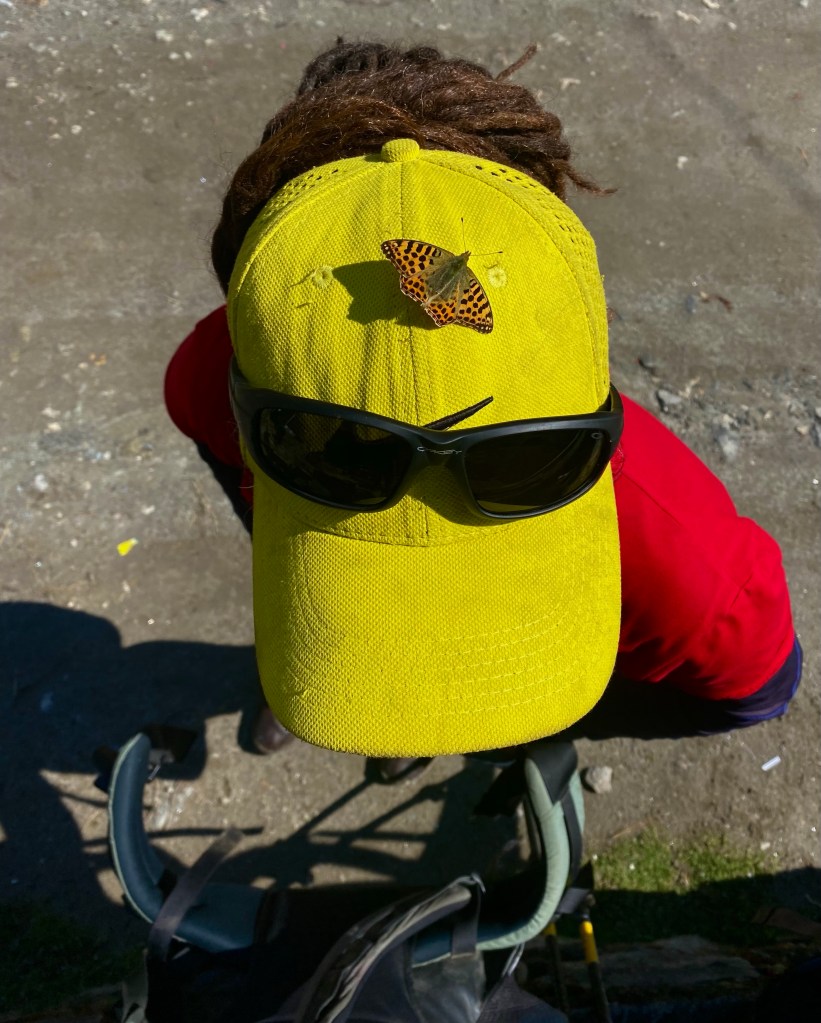


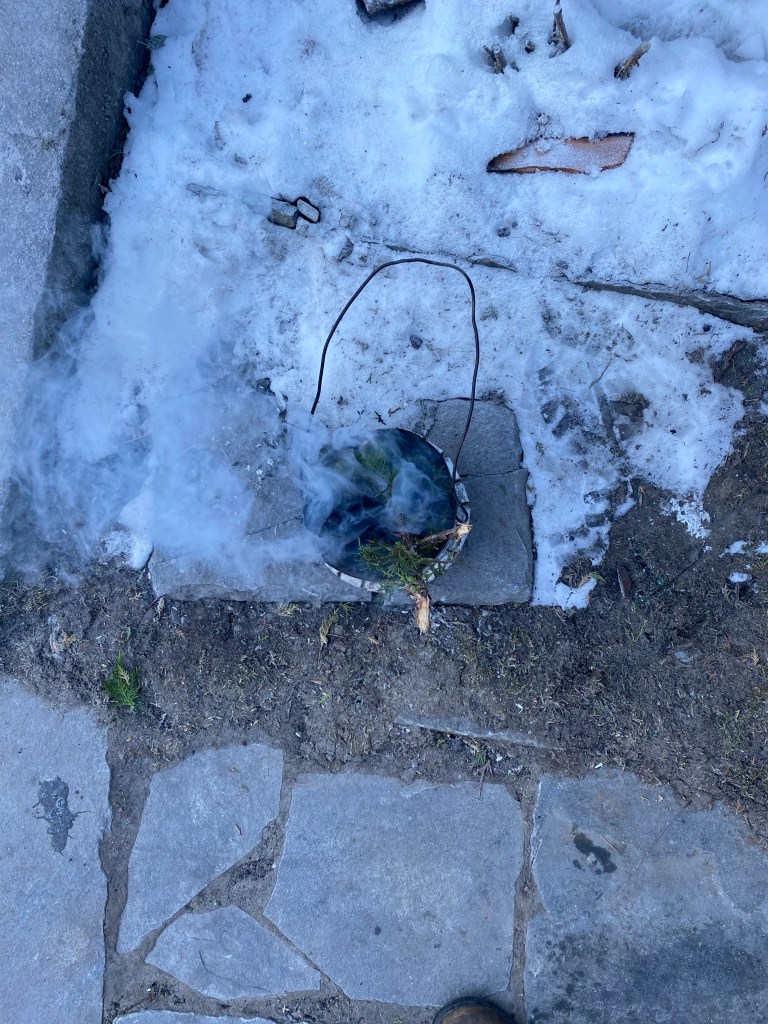
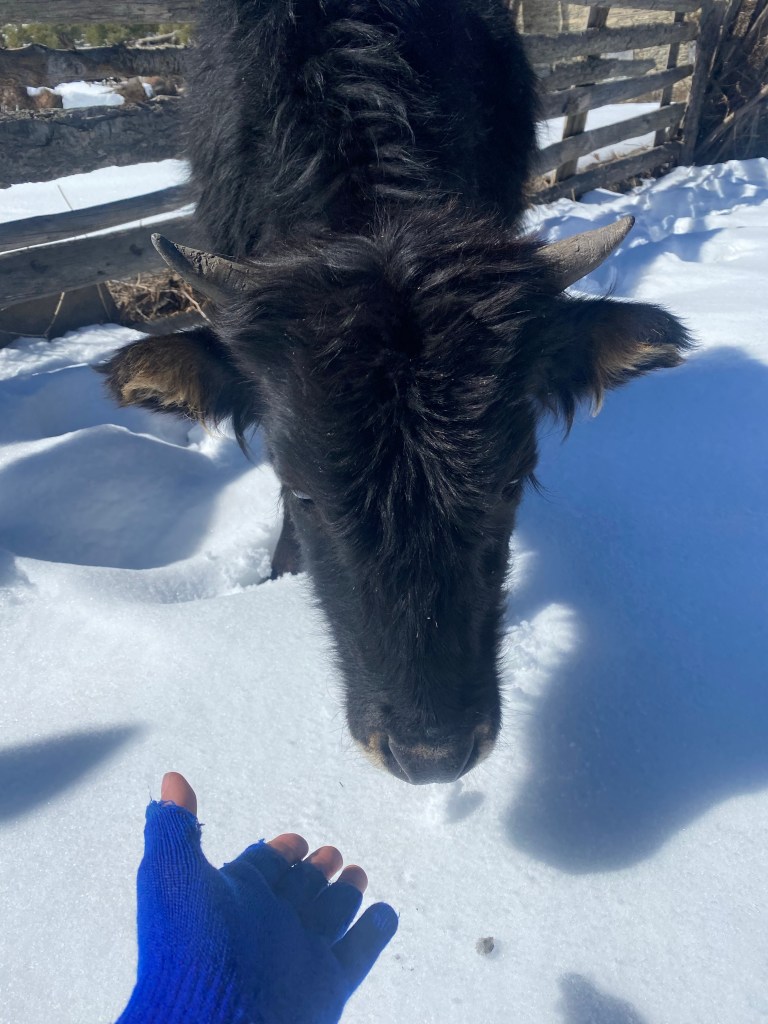
Day twelve – Jomsom to Kalapani, 29km. Elevation 2,530m.
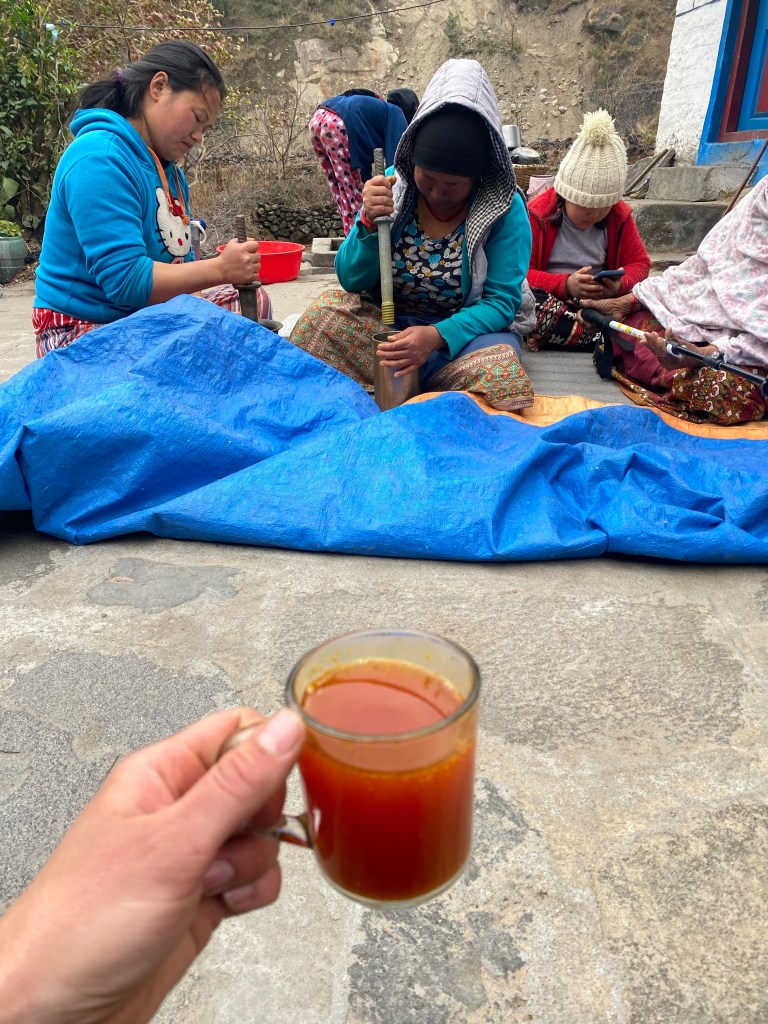
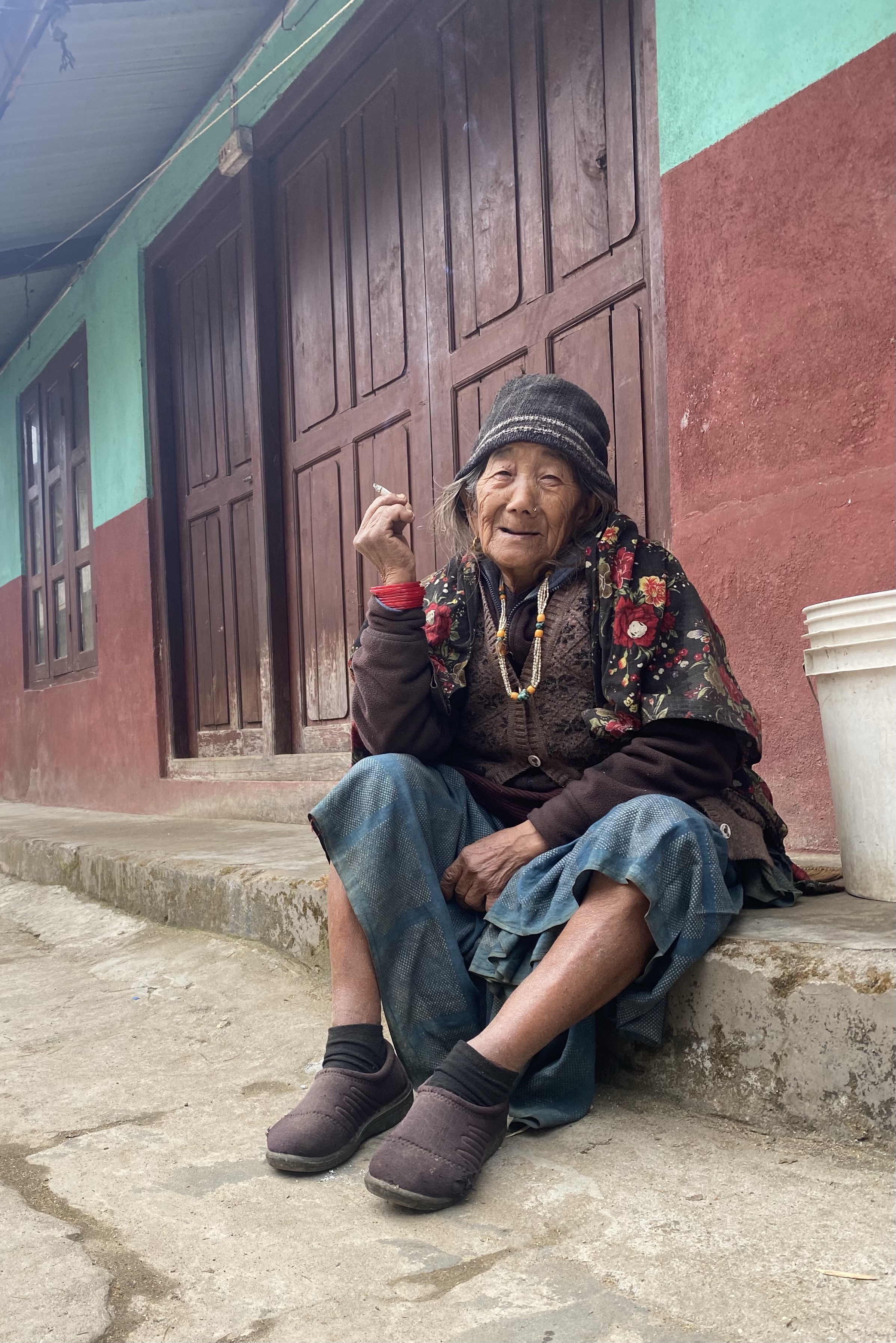
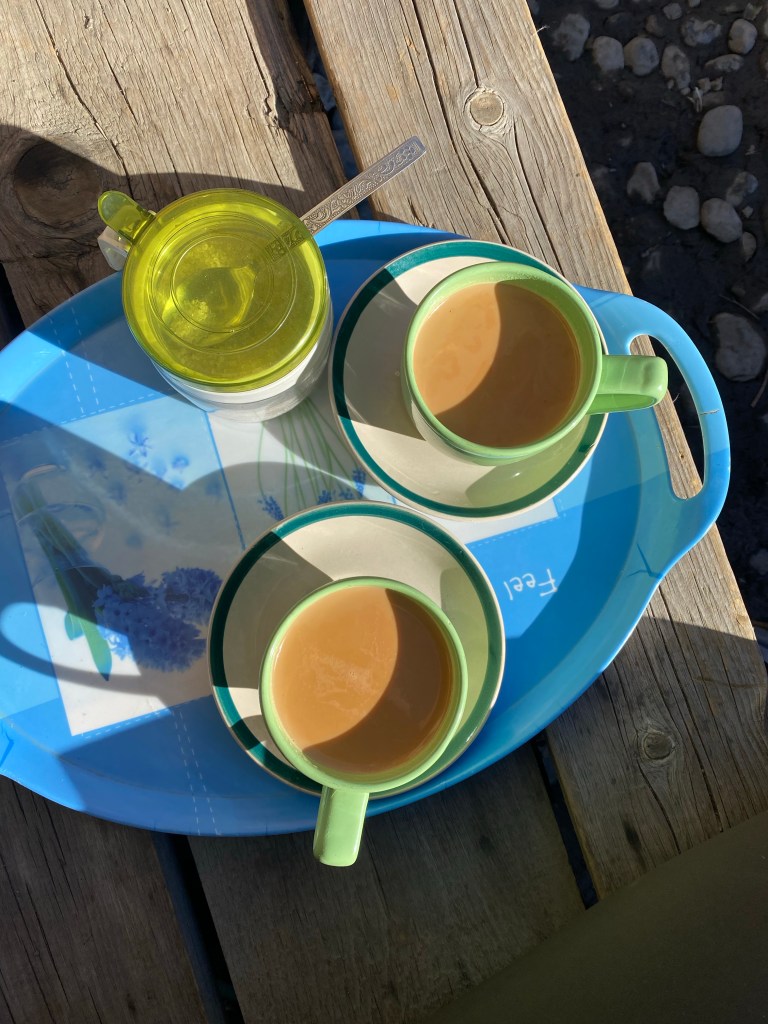
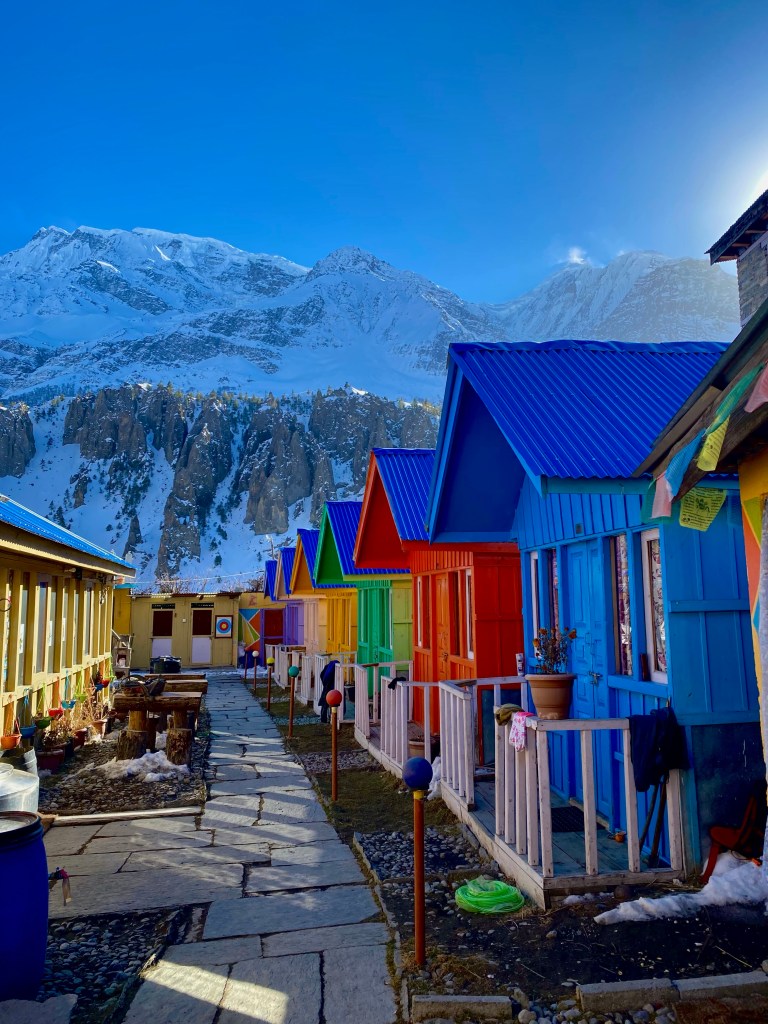
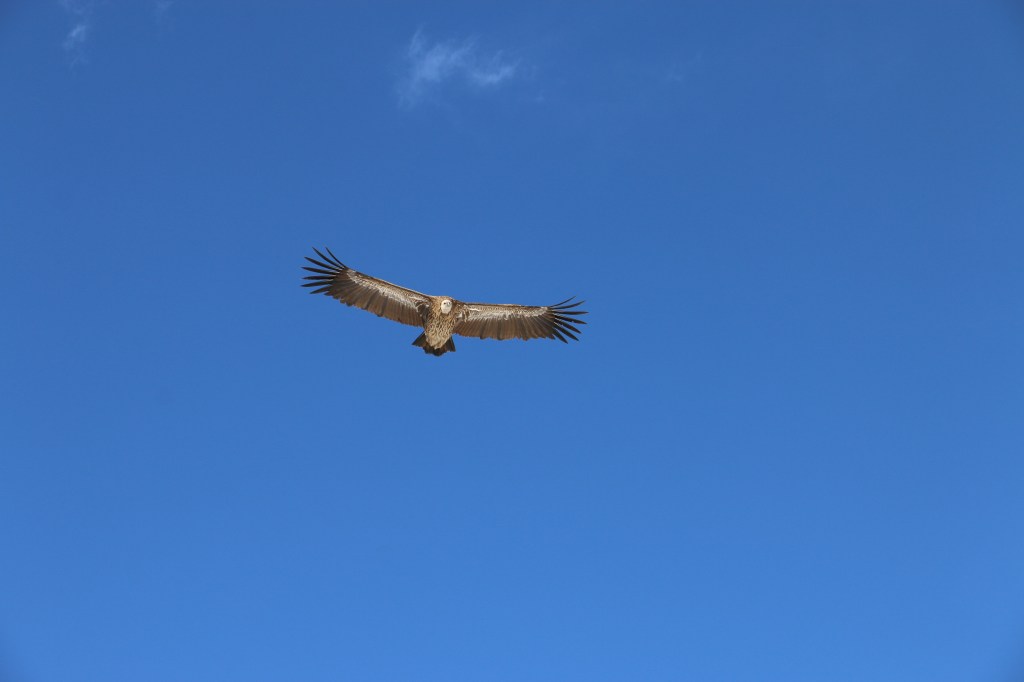
We were now at a lower elevation, so it was easier for that reason. The lengthy days had somewhat of an intensity to them. We passed by some women who were grinding up besar (turmeric) in their front yard. Om chatted with them and they invited us in for a besar tea. We bought a big bag of the stuff for $1 from them to take home, and for months and months later I would add it to my smoothies. So special.
Day thirteen – Kalapani to Tatopani, 23.5km. Elevation 1,235m.
This was a very special day, more magical trekking throughout the day, and when we arrived to Tatopani we got to go to the hot springs! Tatopani means “hot water”. It was such pure bliss to be submerged in hot water after thirteen days on the trail. An absolute must go to on your journey.
Day fourteen – Tatopani to Ghorepani, 15km. Elevation 2,890m.
Today was epically brutal. It was the Himalayan version of the stair master, 1,850m of elevation gain and I could not tell you how many thousands of stairs we stepped up. I could do one hour up and then required minimum ten minutes of rest. While we only hiked for five hours this day, it held a burning intensity in it. We stayed in a teahouse in Ghorepani with almost a hundred rooms, and we were the only ones there. It kind of reminded me of a horror movie, without any murders thankfully.
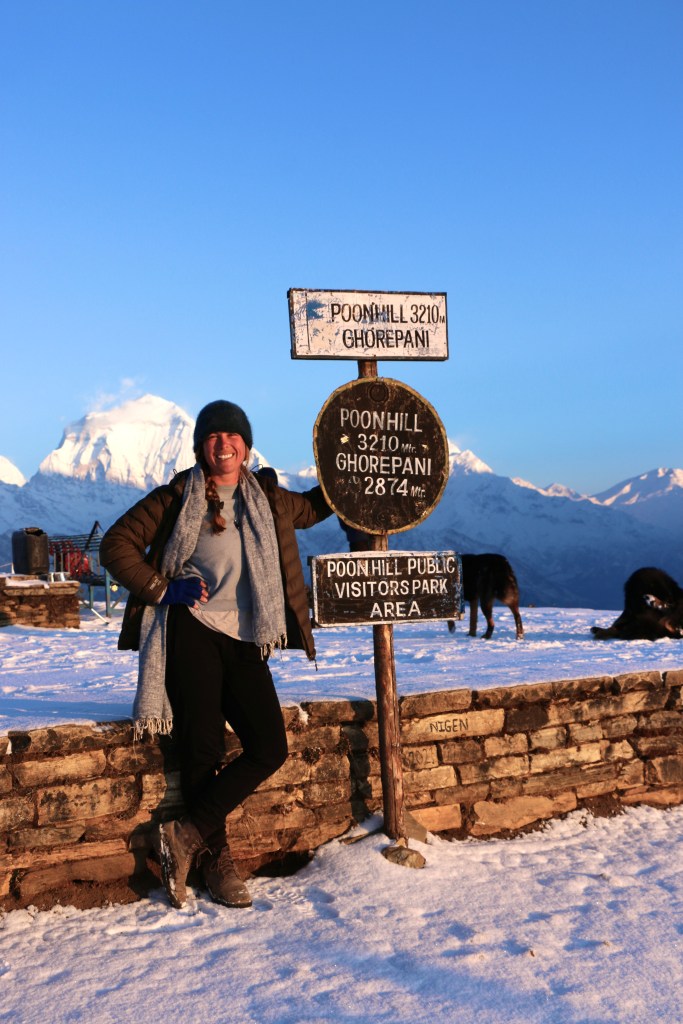
Day fifteen – Ghorepani to Poon Hill (3,210m) for sunrise, 1.5km.
Poon Hill to Nayapul, 19.5km. Elevation 1,045m.
Our last day! Om and I woke up super early again, headlamps on our heads, we made it to Poon Hill to enjoy the sunrising over the Himalayas. Such an epic lookout point and one that is accessible to many travellers, not just the Annapurna circuit goers.
After our sunrise moment, we then descended 2,165m and I just about blew out my knees on the way down. Om running ahead with me trailing behind. We were literally running on a high from our last fifteen days in the mountains. When we arrived to Nayapul we celebrated with an enormous beer (I was without my wheat allergy for this trip, lucky me).
A taxi ride later and we returned to Pokhara, where I would briefly rest before heading back to Kathmandu to get ready for my jungle adventure in Bardiya National Park..
Summary
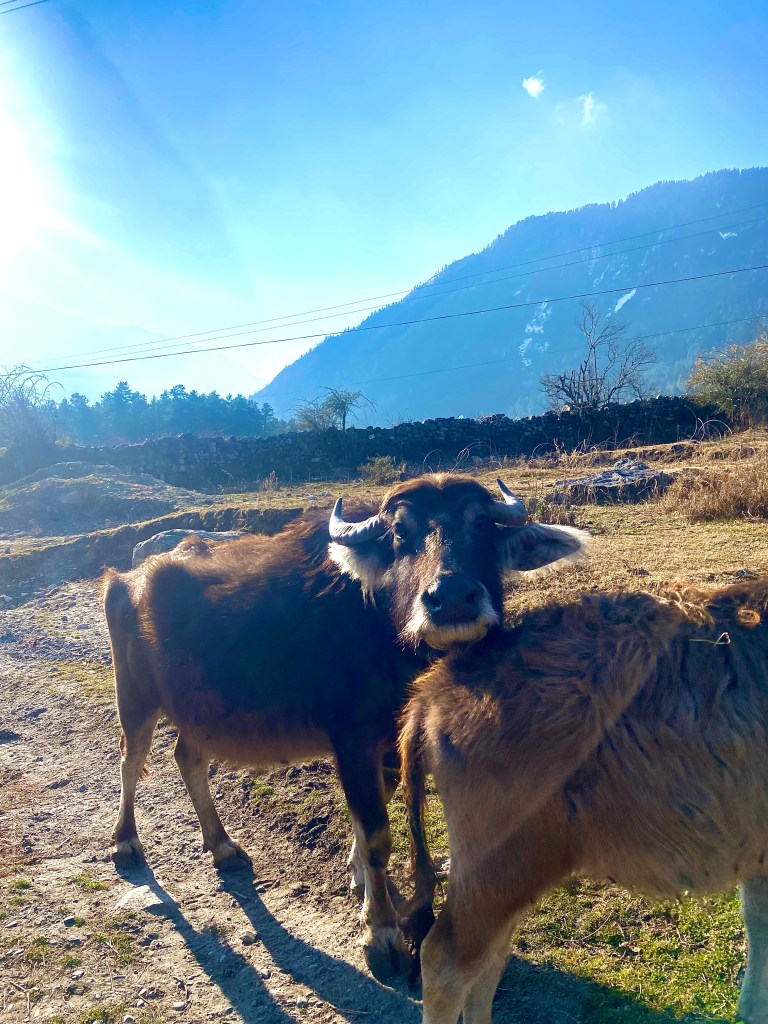
This experience is by far one of the best in my life. The magic in the mountains is incredibly real, and to walk amongst them for 15 days was oh so special. I am so glad I completed my Annapurna circuit trek in the winter time. The added challenge was something else, but the beauty of the mountains is so worth it for that winter wonderland magic!
Thanks so much for reading! If you feel inspired to go to Nepal, you should check out my write up on Bardiya National Park in west Nepal, where you are pretty much guaranteed to see tigers in the wild!
I wish you the laughter on your Himalayan adventure, the mountains are calling you..
Love Georgie xx

 Georgie’s Wanderlust
Leave a comment